How branding protects Amazon listings from hijacking
Author: Adi Malai | | Category: Blog | Reading time: 10 min

Amazon removed over 7 million fraudulent products in 2023 due to hijacking. This staggering figure reveals the scale of the threat facing brand owners on the platform. If you sell on Amazon, understanding how strategic branding acts as your first line of defense against listing hijackers is critical to protecting your sales and reputation in 2026.
Table of Contents
- Understanding Amazon Listing Hijacking And Its Impact
- The Role Of Branding In Enhancing Visibility And Trust
- Amazon Brand Registry: Key Tools For Brand Protection
- Common Misconceptions About Amazon Branding And Hijacking
- Practical Tools And Strategies To Protect Your Brand
- Real-World Case Studies Illustrating Brand Protection Success And Challenges
- Bridging Understanding To Business Application: Next Steps For Amazon Brand Owners
- Protect Your Amazon Brand With Expert Help From Agile Consultancy
- Frequently Asked Questions About Branding And Listing Hijacking On Amazon
Key takeaways
| Point | Details |
|---|---|
| Hijacking threatens sales | Listing hijacking causes immediate sales drops, negative reviews, and customer distrust. |
| Branding boosts protection | Strong brand presence increases visibility, conversion rates, and buy box control. |
| Registry provides tools | Amazon Brand Registry offers Brand Catalog Lock and machine learning detection for enforcement. |
| Monitoring is essential | Active listing surveillance and rapid response prevent hijacker damage escalation. |
| Combine strategies | Effective protection requires branding, Amazon tools, and proactive management together. |
Understanding Amazon listing hijacking and its impact
Listing hijacking occurs when unauthorized sellers attach themselves to your product listing, see our account management services, often selling counterfeit or inferior versions under your brand name. These bad actors exploit your established listing to capture sales without permission or quality control.
Why does hijacking happen? The motivation is simple: profit. Hijackers avoid the work of building their own listings and brand equity, instead piggybacking on your success to make quick money. Some sell genuine products without authorization, while others peddle dangerous counterfeits that damage your reputation.
The consequences hit fast and hard. When hijackers modify listing content or sell counterfeits, you experience sudden traffic drops, plummeting sales, and an avalanche of negative reviews. Customers receiving substandard products blame your brand, not the hijacker. Trust evaporates, and recovering your reputation takes months of effort.
Understanding Amazon listing hijacking risks requires distinguishing between unauthorized resellers and true hijackers:
- Hijackers alter listing details, images, or descriptions to mislead customers
- Counterfeiters sell fake products that damage brand reputation and customer safety
- Unauthorized resellers may sell genuine products but without brand permission or control
- All three types threaten your sales, but hijackers and counterfeiters pose the greatest risk
The scale of this problem is massive, with millions of fraudulent listings appearing annually despite Amazon’s enforcement efforts.
The role of branding in enhancing visibility and trust
Strong branding does more than make your products look professional. It actively defends your listings by increasing visibility and building customer loyalty that hijackers cannot easily undermine.
Consistent branding to increase visibility on Amazon improves conversion rates and sales velocity. When shoppers recognize and trust your brand, they click your listings more often and buy with confidence. This positive feedback loop strengthens your buy box ownership, making it harder for hijackers to win the sale.
Branded listings signal quality and authenticity to customers. Your professional images, detailed descriptions, and cohesive brand story reduce confusion when counterfeit sellers appear. Loyal customers spot fakes more easily and report suspicious activity, becoming an extension of your brand protection efforts.

Amazon’s investment of over $1.2 billion in anti-fraud measures in 2024 demonstrates the platform’s commitment to supporting legitimate brands. This massive investment funds machine learning systems, human review teams, and enforcement tools that work better when you maintain strong brand signals.
Key branding benefits for protection include:
- Higher customer recognition reduces the impact of hijacker presence
- Improved conversion rates maintain sales even when unauthorized sellers appear
- Enhanced buy box control limits hijacker revenue opportunities
- Lower return rates and complaints preserve your account health
- Stronger Amazon algorithm signals boost your listing priority
Amazon invested $1.2B in brand protection systems in 2024, showing platform commitment to defending legitimate sellers
Your brand becomes your moat against attackers when you invest in consistent, quality presentation across all touchpoints.
Amazon Brand Registry: key tools for brand protection
Amazon Brand Registry transforms brand protection from reactive firefighting to proactive defense. This program gives registered trademark owners powerful tools to control their listings and rapidly remove bad actors.
To enroll, you need an active registered trademark in the country where you sell. Once approved, you gain access to features designed specifically to combat hijacking and counterfeiting.
The 2025 enhancements to Brand Registry include Brand Catalog Lock, preventing unauthorized sellers from modifying your listing content. This stops hijackers from changing titles, images, or descriptions to mislead customers or promote counterfeits.
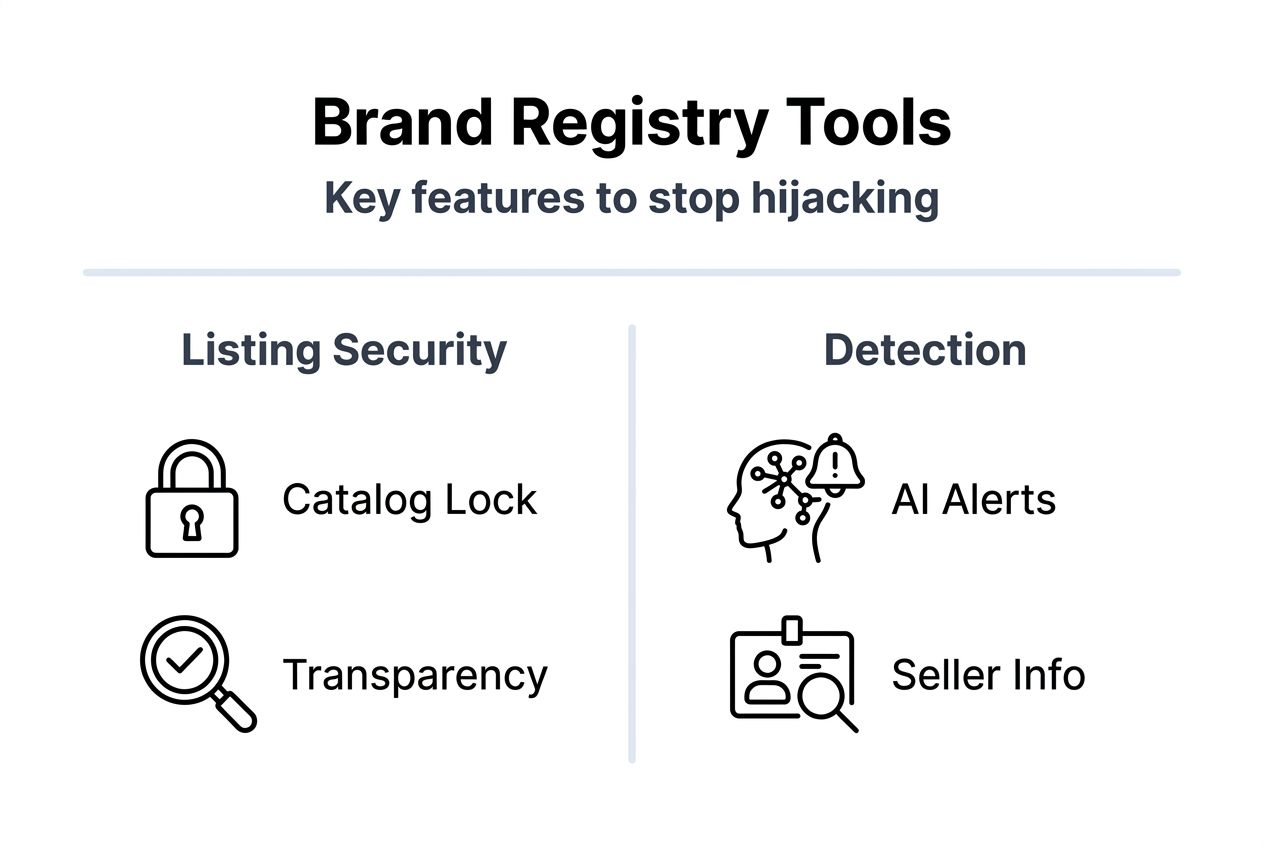
Machine learning systems now provide real-time infringement detection. Amazon’s algorithms scan millions of listings daily, flagging suspicious activity on your registered products. When potential violations surface, you receive alerts enabling immediate action.
Enhanced seller transparency gives you detailed information about who is selling your products. This data helps you distinguish between legitimate distributors and hijackers, making enforcement decisions clearer and faster.
| Tool | Primary Function | Key Benefit |
|---|---|---|
| Brand Catalog Lock | Prevents unauthorized listing edits | Maintains listing integrity and customer trust |
| Machine Learning Detection | Real-time infringement scanning | Early hijacker identification and removal |
| Seller Transparency | Detailed unauthorized seller data | Informed enforcement decisions |
| Proactive Reporting | Automated violation alerts | Rapid response to threats |
Key Brand Registry capabilities:
- Report violations directly through a streamlined interface
- Access to Amazon’s accelerated enforcement queue
- Automated brand protection through Project Zero eligibility
- Enhanced search result presentation with brand logo display
- Access to Stores and A+ Content for stronger brand presence
Pro Tip: Review your Brand Registry reports weekly and update your locked listing content quarterly to stay ahead of seasonal changes and maintain complete control.
Enrolling in Amazon Brand Registry process should be your first step in building a robust defense system.
Common misconceptions about Amazon branding and hijacking
Many sellers hold dangerous misconceptions that leave their listings vulnerable. Clearing up these misunderstandings is essential for effective protection.
Myth: Brand Registry enrollment automatically stops all hijacking. Reality: Brand Registry provides tools, but you must actively use reporting features, monitor listings, and enforce your rights. The system enables protection but does not deliver it passively.
Misunderstanding: All unauthorized sellers are hijackers. Clarification: True hijackers illicitly modify your listing content or sell counterfeit products. Unauthorized resellers may sell genuine versions of your products without permission. While both are problematic, they require different response strategies.
Belief: Strong branding alone prevents hijacking. Reality: Branding increases visibility and trust, making hijacking less profitable, but determined bad actors still attempt it. You need branding plus Amazon’s enforcement tools plus active monitoring for complete protection.
Common false assumptions:
- Thinking Amazon will automatically defend your brand without your involvement
- Assuming hijackers only target high-volume products (they attack any profitable listing)
- Believing legal trademarks are optional for serious brand protection
- Expecting one-time enforcement to permanently solve the problem
Pro Tip: Check your listings every few days and act within 24 hours when you spot unauthorized sellers, before they accumulate sales and reviews that complicate removal.
The truth is that brand protection requires ongoing vigilance, not one-time setup.
Practical tools and strategies to protect your brand
Protecting your Amazon brand requires combining multiple tools and following systematic enforcement workflows. Here is your action roadmap.
Your brand protection toolkit should include Amazon’s native features plus specialized third-party solutions:
| Tool | Type | Best For |
|---|---|---|
| Amazon Brand Registry | Platform native | Reporting violations and controlling content |
| Project Zero | Platform native | Self-service counterfeit removal |
| Transparency | Platform native | Product authentication via serialization |
| AxleIT | Third-party | AI-powered automated listing monitoring |
Step-by-step monitoring and enforcement process:
- Set up daily automated alerts for new sellers on your listings
- Verify each new seller’s authorization status against your distribution records
- Document unauthorized sellers with screenshots and order tests when needed
- File infringement reports through Brand Registry with complete evidence
- Escalate persistent violators to Amazon’s Brand Protection team
- Follow up on all reports until resolution is confirmed
Quick response tactics when hijackers appear:
- Send cease and desist letters immediately to known violators
- File test buy orders to confirm counterfeit or unauthorized products
- Submit detailed infringement claims with supporting documentation
- Request expedited review for active customer harm situations
- Consider legal action for repeat offenders after Amazon removal
Implementing Amazon brand management strategies systematically reduces your vulnerability. Professional seller account management for brand protection ensures nothing falls through the cracks during busy periods.
Pro Tip: Use AI monitoring tools to scan your listings continuously, then manually verify flagged issues before filing reports to maintain your credibility with Amazon’s enforcement teams.
Many brands benefit from professional brand protection services that combine expertise, technology, and dedicated monitoring resources.
Real-world case studies illustrating brand protection success and challenges
Real seller experiences demonstrate both the severity of hijacking threats and the effectiveness of proper defensive measures.
A customized home goods brand experienced sudden sales collapse when hijackers appeared selling cheap counterfeits. Within two weeks, the listing accumulated 15 one-star reviews from customers receiving inferior products. Daily revenue dropped 70%, and the brand’s carefully built reputation suffered severe damage.
The response strategy involved:
- Immediate enrollment in Brand Registry after securing trademark registration
- Activating Brand Catalog Lock to prevent further listing modifications
- Filing detailed infringement reports with photographic evidence of counterfeits
- Conducting test purchases to document quality differences
- Contacting affected customers directly to resolve complaints
Within 30 days, Amazon removed all hijackers. The brand implemented ongoing monitoring, catching and removing three additional hijacking attempts in the following quarter before they gained traction.
Key lessons from successful brand defense:
- Speed matters: Early detection and rapid response minimize revenue loss
- Documentation wins: Detailed evidence accelerates Amazon’s enforcement decisions
- Consistency counts: Regular monitoring prevents recurring hijacker problems
- Recovery takes time: Rebuilding customer trust after hijacking requires months of quality delivery
Brands that combine proactive monitoring, immediate enforcement, and consistent quality maintenance successfully defend their listings. Those who wait until after significant damage occurs face longer, more expensive recovery processes.
Bridging understanding to business application: next steps for Amazon brand owners
You now understand how branding enhances visibility and trust while Amazon’s tools enable active protection. Translating this knowledge into action requires systematic implementation.
Branding impacts every aspect of hijacking prevention. Your professional presentation attracts loyal customers who recognize and report fakes. Your trademark enables Brand Registry enrollment. Your consistent quality makes counterfeit products obviously inferior to trained eyes.
Your implementation roadmap:
- Secure trademark registration if you have not already done so
- Enroll in Amazon Brand Registry within 30 days of trademark approval
- Activate Brand Catalog Lock and configure automated violation alerts
- Establish weekly listing monitoring routines or deploy automated tools
- Create documented response protocols for rapid hijacker removal
- Train your team on brand protection procedures and escalation paths
- Review and update your branding consistency across all listings quarterly
Hijacking tactics evolve constantly as bad actors develop new workarounds. Staying ahead requires combining Amazon’s continuously improving tools with your proactive management. Neither works effectively alone.
When hijacking attempts become overwhelming or you lack bandwidth for consistent monitoring, seeking expert help protects your investment. Professional brand managers bring specialized knowledge, established Amazon relationships, and dedicated resources that many brand owners cannot maintain in-house. Your Amazon brand management roadmap should include decision points for when to bring in outside expertise.
The effort you invest in brand protection directly correlates with your long-term Amazon success and profitability.
Protect your Amazon brand with expert help from Agile Consultancy
Protecting your Amazon listings from hijackers while growing your sales requires expertise, technology, and constant vigilance. Agile Consultancy specializes in helping brands like yours defend their listings and maximize marketplace potential.
Our Amazon brand protection services combine Brand Registry management, automated monitoring, rapid enforcement, and strategic growth planning. We handle the technical details and time-consuming monitoring so you can focus on product development and business growth.
Our team brings years of Amazon expertise and direct platform relationships that accelerate hijacker removal and account issue resolution. We integrate the latest protection tools with proven best practices tailored to your specific brand and product category.
Whether you need help setting up Brand Registry, implementing monitoring systems, or managing ongoing enforcement, our Amazon brand management process guide approach ensures nothing falls through the cracks. Professional seller account management protects your revenue while optimizing your Amazon performance.
Contact Agile Consultancy today to secure your brand and unlock your full Amazon sales potential in 2026.
Frequently asked questions about branding and listing hijacking on Amazon
What is Amazon listing hijacking and how can I spot it?
Listing hijacking occurs when unauthorized sellers attach themselves to your product listing, often selling counterfeits or inferior versions. You can spot hijacking by regularly checking the “Other Sellers” section of your listing for unfamiliar seller names, monitoring for sudden drops in sales or increases in negative reviews, and watching for unauthorized changes to listing content like titles, images, or descriptions.
Does simply enrolling in Amazon Brand Registry stop hijackers?
No, Brand Registry enrollment provides powerful tools but does not automatically stop all hijacking attempts. You must actively use the reporting features, monitor your listings regularly, and respond quickly to violations. Think of Brand Registry as giving you a security system, but you still need to check the cameras and respond to alerts.
What are the best monitoring tools for protecting my Amazon listings?
The most effective approach combines Amazon’s native Brand Registry alerts with third-party AI monitoring tools like AxleIT. Amazon’s tools provide direct enforcement capabilities, while specialized software offers more frequent scanning and detailed analytics. Many successful brands use automated monitoring to flag issues, then manually verify before filing reports to maintain accuracy.
How fast should I respond to a hijacking incident to minimize damage?
Respond within 24 hours of detecting unauthorized sellers to prevent them from accumulating sales and reviews. Quick action stops hijackers before they gain traction and reduces the negative impact on your sales and reputation. Document the violation immediately with screenshots, then file your Brand Registry report with complete evidence to accelerate Amazon’s enforcement.
Can strong branding alone prevent counterfeit sellers on Amazon?
No, branding alone cannot prevent determined hijackers from attempting to sell on your listings. However, strong branding makes hijacking less profitable by building customer loyalty, improving your buy box control, and helping shoppers identify fakes more easily. Effective protection requires combining consistent branding with Amazon’s enforcement tools and active monitoring for complete defense.
Amazon Growth Agency - Listed in the Amazon Service Provider Network
Agency specialized in growing brands on Amazon through data-driven PPC strategies, conversion-optimized listings, and complete Seller Central account management.