Master the Amazon Brand Management Process for Growth
Author: Adi Malai | | Category: Blog | Reading time: 11 min

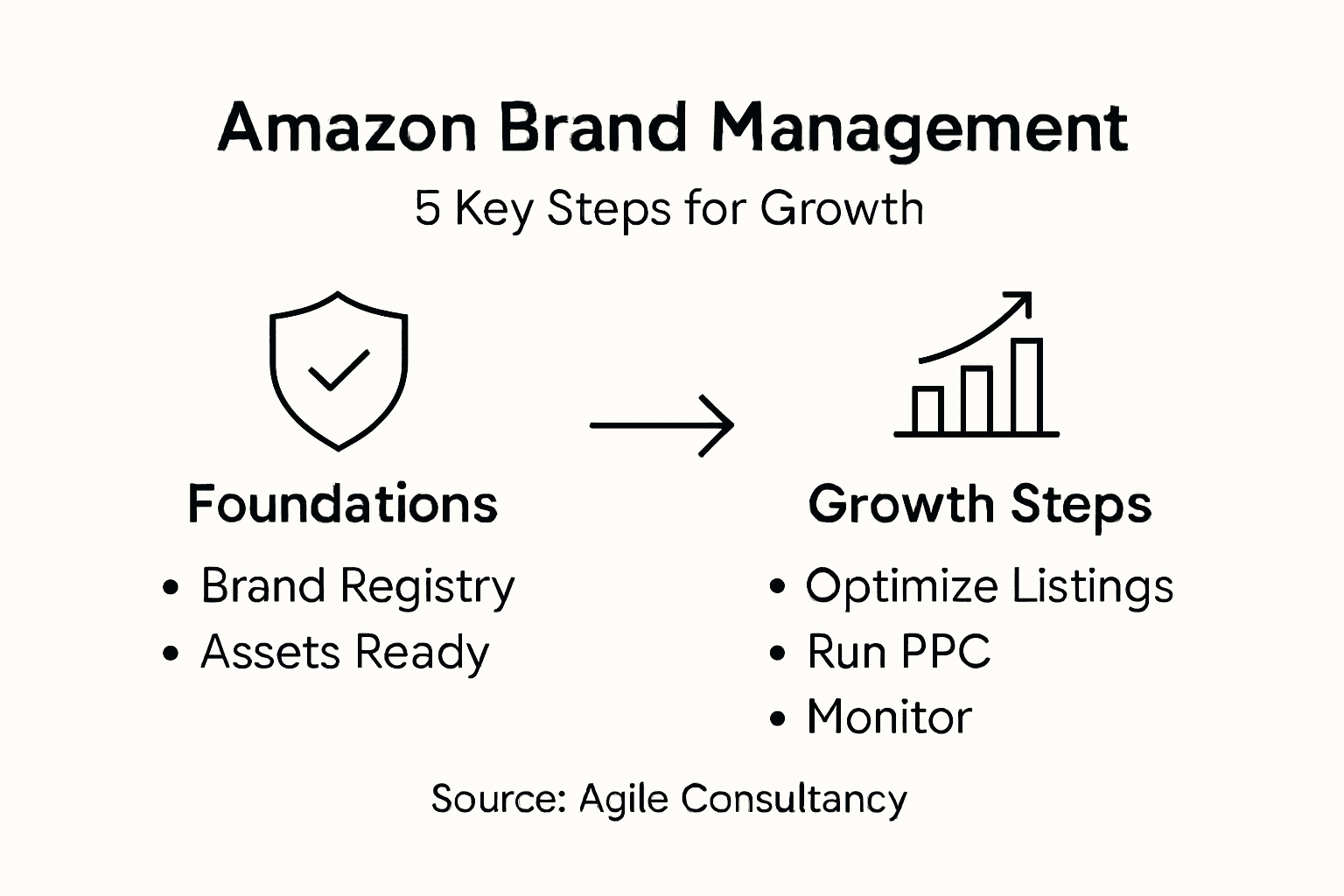
Brand owners working to stand out on Amazon know the risks of lost sales and counterfeit threats can quickly derail even the best products. Managing every step from securing your trademark to optimizing product listings, see our account management services and running data-driven ads is essential for sustainable success. This guide breaks down how to build a foundation with Amazon Brand Registry, optimize visibility, and defend your reputation with proven tools that put you in control of your brand’s future.
Table of Contents
- Step 1: Establish Brand Assets And Secure Amazon Brand Registry
- Step 2: Optimize Product Listings For Visibility And Conversion
- Step 3: Implement Data-Driven PPC Campaigns For Growth
- Step 4: Monitor Listings And Address Hijacking Threats
- Step 5: Verify Sales Performance And Brand Integrity
Quick Summary
| Key Insight | Explanation |
|---|---|
| 1. Register Your Trademark | Secure trademark registration before applying for Amazon Brand Registry to protect your brand. |
| 2. Optimize Product Listings | Conduct Amazon PPC management including keyword research and create compelling titles, bullet points, and descriptions for visibility. |
| 3. Monitor for Listing Hijacks | Regularly check for unauthorized sellers and take immediate action to protect your brand integrity. |
| 4. Implement Data-Driven PPC | Use real-time data to refine PPC campaigns and boost sales through targeted advertising efforts. |
| 5. Analyze Sales Performance | Regularly review sales metrics and customer behavior to identify trends and adjust strategies accordingly. |
Step 1: Establish brand assets and secure Amazon brand registry
Your brand identity on Amazon starts with solid foundational assets and proper registration. In this step, you’ll gather the materials you need and enroll in Amazon Brand Registry to unlock powerful seller tools and protection mechanisms.
Start by collecting your brand assets. You’ll need your official brand logo, brand name, and any trademark documentation you have on file. Ideally, your brand name matches a registered trademark, as this strengthens your application significantly. If you don’t have trademark protection yet, consider registering one before proceeding-it’s worth the investment for long-term brand security.
Next, verify your trademark status. Amazon requires proof of a registered trademark to approve your brand registry enrollment. This can be a trademark registered with your country’s intellectual property office, such as the United States Patent and Trademark Office (USPTO) or equivalent authorities globally. Having this documentation ready streamlines the entire process.
When you’re ready to apply, prepare these key pieces of information:
- Your registered trademark number and status
- Official brand name as it appears on your trademark
- Product categories where your brand operates
- High-quality images of your branded products
- Your Amazon Seller Central account details
Understanding Amazon Brand Registry requirements ensures your application gets approved on the first submission, saving you weeks of back-and-forth with Amazon support.
Once you submit your brand registry application through Seller Central, Amazon will send a verification code to the trademark owner’s registered address or email. This code confirms you have authority over the trademark. Keep an eye on your inbox and respond promptly when Amazon reaches out.
The approval process typically takes 1-2 weeks, though it can vary. During this time, Amazon verifies your trademark ownership and reviews your brand information.
Pro tip: Document everything during this step-keep copies of your trademark certificates, brand asset files, and Amazon correspondence in one organized folder, as you’ll reference these materials repeatedly when managing brand protection later.
Step 2: Optimize product listings for visibility and conversion
Your product listing is your storefront on Amazon, and optimization directly impacts whether customers find you and decide to buy. In this step, you’ll refine titles, descriptions, images, and keywords to rank higher in search results and convert browsers into buyers.
Begin with keyword research. Understand what terms your target customers actually search for when looking for products like yours. Use Amazon’s search bar autocomplete feature, competitor listings, and keyword research tools to identify high-volume, low-competition terms. These keywords form the foundation of your entire listing strategy.
Craft a compelling product title that balances keyword optimization with readability. Your title should include your primary keyword, brand name, key product features, and any critical attributes like size or color. Amazon’s algorithm prioritizes titles heavily, so place your most important keywords near the beginning. Avoid keyword stuffing, which damages credibility and conversion rates.

Next, optimize your bullet points for both the algorithm and human readers. Optimizing Amazon product titles and bullet points drives clickthrough rates and initial interest. Each bullet should highlight a distinct benefit or feature, starting with action words and focusing on what matters to your customer.
Your product description is where you tell your brand story and address customer objections. Weave in secondary keywords naturally while explaining product benefits, materials, usage instructions, and any warranties or guarantees. This section builds trust and confidence in purchase decisions.
Images are critical for conversion. Use high-quality photos that comply with Amazon’s guidelines:
- Primary image shows product clearly against a clean white background
- Lifestyle images demonstrate product in use
- Detail shots highlight texture, craftsmanship, or important features
- Include infographics showing dimensions, comparisons, or benefits
- Use all allowed image slots to maximize engagement
Quality images and keyword-optimized copy work together to convince customers your product solves their specific problem.
Finally, monitor your listing performance using Amazon’s analytics dashboard. Track conversion rates, bounce rates, and search terms that drive traffic. Make data-driven adjustments to underperforming elements monthly.
Pro tip: A/B test your main image and primary bullet point every 30 days-these two elements drive the majority of conversions, so small improvements compound into significant sales increases over time.
Step 3: Implement data-driven PPC campaigns for growth
Paid advertising on Amazon accelerates your growth by placing products directly in front of customers actively searching for solutions. In this step, you’ll build and optimize campaigns using real-time data and performance metrics to maximize return on investment.
Start by understanding Amazon’s advertising ecosystem. You have three primary campaign types to consider: Sponsored Products ads appear in search results and product detail pages, Sponsored Brands showcase your brand logo and multiple products, and Demand-Side Platform campaigns target customers across Amazon’s network. Begin with Sponsored Products as they deliver the fastest results for most sellers.
Here’s a quick summary of Amazon’s main advertising campaign types and their business impact:
| Campaign Type | Where Ads Appear | Key Business Impact |
|---|---|---|
| Sponsored Products | Search results, product pages | Boosts sales and visibility |
| Sponsored Brands | Top of search, custom brand banner | Builds brand awareness |
| Demand-Side Platform | Amazon sites and partner networks | Expands reach beyond Amazon |
Build your keyword strategy next. Data-driven Amazon PPC optimization requires refining keyword research and structuring campaigns strategically around high-intent search terms. Separate keywords into three groups: broad, phrase, and exact match types. This segmentation allows you to bid differently based on search intent and relevance.
Structure your campaigns strategically by organizing them logically:
- One campaign per product or product family
- Separate campaigns for branded versus generic keywords
- Dedicated campaigns for testing new keywords and bids
- Campaigns organized by profit margin or product stage
Once your campaigns launch, focus on bid management. Your bids directly control ad placement and visibility. Start conservatively with bids around your target ACOS (Advertising Cost of Sales), then adjust based on performance data. High-converting keywords deserve higher bids, while underperforming keywords should be reduced or paused.
Monitor critical performance metrics consistently. Track ACOS (ad spend divided by attributed sales), ROAS (revenue from ads divided by ad spend), and conversion rates. These numbers reveal which campaigns and keywords drive profitable growth versus which drain your budget.
AI and predictive analytics in Amazon advertising enable real-time optimization, allowing you to identify high-value prospects and adjust bids automatically for continuous improvement.
Leverage automation tools within Seller Central to scale your efforts. Dynamic bidding options adjust your bids based on likelihood of conversion, reducing manual workload while improving performance. Review campaign data weekly and make adjustments to underperforming keywords and bids.
Pro tip: Start with a 30-day test budget of 10-15% of your monthly revenue target, then scale aggressively with campaigns showing ACOS below your profit margin threshold-this disciplined approach prevents overspending while identifying your most profitable ad channels.
Step 4: Monitor listings and address hijacking threats
Listing hijacking represents one of the most damaging threats to your Amazon brand. Unauthorized sellers claim your product listings, divert customer traffic, and damage your reputation. In this step, you’ll implement monitoring systems and protective measures to defend your brand integrity.
Begin with daily monitoring. Check your active listings regularly to verify that only authorized sellers are offering your products. Look for suspicious seller names, modified product details, or pricing that seems out of line with your strategy. Set calendar reminders or use monitoring tools to catch unauthorized activity quickly before it escalates.
Identify the warning signs of hijacking attempts. Unauthorized sellers often appear suddenly with minimal feedback history, change product titles or descriptions, offer significantly lower prices to undercut you, or add counterfeit or refurbished variants without authorization. These red flags deserve immediate investigation and action.
When you detect unauthorized sellers, take swift action through these steps:
- Document evidence by taking screenshots of the listing, seller information, and any suspicious changes
- Review the seller’s profile and feedback history for patterns of fraudulent activity
- Contact Amazon Seller Central to report the hijacker
- File a complaint through the “Report this Seller” feature on the unauthorized listing
- Escalate to Amazon Brand Registry support if the hijacker persists
Protect yourself proactively by establishing brand protection protocols. Use Amazon’s Brand Registry tools to monitor unauthorized sellers across your entire product portfolio. Enable enrollment in the Transparency program or Project Zero if you qualify, which adds additional layers of brand protection and gives you direct removal authority.
Catching hijackers within the first 24 hours significantly increases your chances of removal before they gain traction and damage your brand reputation.
Communicate with your authorized distribution channels. Ensure all legitimate sellers know they have permission to list your products and understand your expectations for listing accuracy and pricing consistency. This prevents confusion and helps you quickly identify imposters.
Monitor customer reviews and feedback for patterns suggesting unauthorized sellers. Complaints about packaging quality, shipping delays, or unexpected variants often indicate hijacking activity. Customer feedback becomes your early warning system.
Pro tip: Set up weekly automated listing audits using your Seller Central dashboard, and create a simple spreadsheet tracking any unauthorized sellers you encounter-building this history helps you identify repeat offenders and strengthens your case when escalating to Amazon support.
Step 5: Verify sales performance and brand integrity
Data reveals the true health of your brand on Amazon. In this step, you’ll examine sales metrics, customer behavior, and product authenticity to confirm your brand is performing well and remaining protected from fraud.
Access Amazon Brand Analytics through your Seller Central dashboard. This tool provides comprehensive insights into customer loyalty, search term performance, and repeat purchase behavior. Review these metrics monthly to understand which products resonate with customers and which underperform.
Start by analyzing sales trends. Track month-over-month growth, seasonal patterns, and the impact of your advertising campaigns. Compare your performance against competitor benchmarks within your category. Declining sales despite consistent inventory might indicate listing hijacking, counterfeit competition, or shifting customer preferences.
Examine customer loyalty metrics carefully. Amazon Brand Analytics metrics reveal repeat purchase rates and customer lifetime value. High repeat rates indicate strong brand loyalty and product satisfaction. Low rates suggest quality issues or customer dissatisfaction that deserves investigation.
Monitor these critical performance indicators:
Compare core Amazon Brand Analytics metrics to understand how each drives brand health:
| Metric | What It Measures | Business Value |
|---|---|---|
| Repeat Purchase Rate | Share of returning customers | Indicates brand loyalty |
| Search Term Ranking | Visibility for primary keywords | Reveals discoverability |
| Conversion Rate | Percentage of browsers who buy | Shows listing effectiveness |
| Customer Lifetime Value | Total value per customer | Guides long-term growth |
- Month-over-month sales growth or decline
- Average selling price trends and competitive positioning
- Customer repeat purchase rates and loyalty patterns
- Search term rankings for your primary keywords
- Conversion rates and customer acquisition costs
Verify brand integrity through multiple channels. Check that product images, descriptions, and specifications remain accurate and unchanged. Look for unauthorized variations or counterfeit products appearing under your ASIN. Amazon’s AI-driven counterfeit detection provides additional layers of protection, but your vigilance matters too.
Review customer feedback regularly for quality complaints or authenticity concerns. Negative reviews mentioning unexpected variants, poor packaging, or obvious counterfeits signal potential fraud or hijacking. Respond promptly to these reviews and investigate their root cause.
Rising customer complaints combined with declining sales is your early warning system that something threatens your brand integrity.
Compare your product cost of goods sold against average selling prices. Widening margins might indicate successful optimization, while shrinking margins suggest competitive pressure or unauthorized discounting. Investigate any unexpected margin changes immediately.
Use this data to inform strategic decisions. If specific products show strong loyalty metrics, consider expanding that product line. If sales decline despite marketing investment, revisit your listing optimization or investigate competitive threats.
Pro tip: Export your Amazon Brand Analytics data into a simple spreadsheet monthly and chart trends over six months-visual trends reveal patterns you might miss in raw numbers, helping you identify growth opportunities or emerging threats before they escalate.
Accelerate Your Amazon Brand Growth with Expert Support
Managing your Amazon brand involves complex challenges like securing brand registry, optimizing listings, launching data-driven PPC campaigns, and defending against hijacking threats. These steps demand continuous attention to detail and strategic expertise to maximize visibility, protect your brand integrity, and boost sales. If you find yourself overwhelmed by managing every aspect or want to ensure your brand stands strong on the world’s largest marketplace, specialized support can make all the difference.
At Agile Consultancy, we understand the pressures Amazon sellers face. Our comprehensive services include full-account management for Amazon Seller Central, tailored PPC optimization focused on lowering your ACOS, and continuous listing monitoring to block unauthorized sellers. Partnering with us means you gain access to proven strategies that combine powerful brand protection with measurable sales growth.
Transform your Amazon journey today and benefit from a complimentary audit to pinpoint your unique opportunities.
Accelerate Your Amazon Success with Agile Consultancy
Optimizing PPC Campaigns for Measurable Growth
Protect Your Brand and Listings

Take control of your Amazon brand with expert guidance now. Visit Agile Consultancy and start scaling your business with confidence and security.
Frequently Asked Questions
What are the essential brand assets needed for Amazon Brand Registry?
To enroll in Amazon Brand Registry, you need your official brand logo, brand name, and trademark documentation. Gather these materials before starting your application to ensure a smooth process.
How can I optimize my product listings for better visibility on Amazon?
To enhance product visibility, conduct thorough keyword research and use high-quality images that meet Amazon’s guidelines. Focus on creating compelling titles, bullet points, and descriptions that incorporate these keywords; updating listings can often improve search rankings within a few weeks.
What types of advertising campaigns are available on Amazon, and how do I choose the right one?
Amazon offers Sponsored Products, Sponsored Brands, and Demand-Side Platform campaigns. Start with Sponsored Products, as they typically yield quicker results for driving sales.
How can I effectively monitor my Amazon listings for potential hijacking?
Establish a routine for daily monitoring of your listings to ensure that only authorized sellers are selling your products. Document any suspicious activity immediately and be prepared to take action against unauthorized sellers to protect your brand.
What key performance metrics should I track for my brand on Amazon?
Track metrics such as sales trends, repeat purchase rates, conversion rates, and customer feedback regularly. Analyzing these indicators can help identify areas for improvement and inform your brand’s overall strategy.
How can I prove my brand’s integrity on Amazon?
Review your listings for accuracy and monitor customer feedback for signs of counterfeit products. Regular audits and swift action against unauthorized variations or complaints will help maintain your brand’s integrity and customer trust.
Amazon Growth Agency - Listed in the Amazon Service Provider Network
Agency specialized in growing brands on Amazon through data-driven PPC strategies, conversion-optimized listings, and complete Seller Central account management.