Why Manage Seller Accounts: Boost Sales and Protect Your Brand
Author: Adi Malai | | Category: Blog | Reading time: 13 min

Many Amazon sellers in Europe and North America still believe managing an account is only about paperwork and day-to-day tasks. This misunderstanding leads to missed sales and greater exposure to risks that can damage brand reputation. Clear account management drives sales growth, safeguards your brand from unauthorized sellers, and turns operational planning into a competitive weapon. By focusing on proactive relationship management instead of just routine admin work, you set your business up for long-term success.
Table of Contents
- Defining Seller Account Management and Misconceptions
- Types of Amazon Seller Accounts Explained
- Benefits of Proactive Account Management
- Risks of Neglect and Policy Compliance Issues
- Essential Practices for Operational Success
Key Takeaways
| Point | Details |
|---|---|
| Seller Account Management is Strategic | It involves overseeing relationships, optimizing performance, and mitigating risks to drive sales growth. |
| Proactive Management Prevents Issues | Waiting for problems to arise can lead to account suspension and lost revenue; effective management identifies and addresses issues early. |
| Choosing the Right Account Type is Essential | Selecting between Individual and Professional accounts impacts fees, tools available, and growth potential for your business. |
| Compliance is Critical for Success | Failure to adhere to Amazon’s policies and tax obligations can lead to severe consequences, including account suspension and financial penalties. |
Defining Seller Account Management and Misconceptions
Seller account management isn’t just about keeping records organized. It’s a strategic practice that directly impacts your sales growth, brand reputation, and operational efficiency on Amazon.
Most sellers misunderstand what account management actually involves. Many think it’s purely administrative-handling invoices, customer details, and compliance documents. That’s only part of the picture.
What Seller Account Management Really Is
Seller account management combines relationship oversight, performance optimization, and risk mitigation into one cohesive practice. Account managers focus on maintaining relationships and identifying growth opportunities rather than handling routine administrative tasks.
This means:
- Monitoring listing health, pricing strategy, and inventory levels
- Protecting your brand from counterfeiters, unauthorized sellers, and account hijacking
- Analyzing sales data to identify trends and optimization opportunities
- Managing communications with Amazon, customers, and logistics partners
- Ensuring compliance with Amazon’s policies and regulatory requirements
Think of it as the difference between driving a car and maintaining one. Account management is the maintenance-preventive care that keeps everything running smoothly.
Common Misconceptions That Hurt Sales
Misconception #1: “Account management is only necessary for large-scale sellers.” Many smaller European and North American brands skip proper account management because they assume it’s overkill. Reality? Account hijacking, unauthorized resellers, and policy violations affect sellers of all sizes. Small accounts are often easier targets because they lack protective oversight.
Misconception #2: “Managing accounts means micromanaging every transaction.” This creates unnecessary stress and wastes time. Effective management focuses on strategic oversight, not daily transaction monitoring. You establish systems and alerts that flag real problems.
Misconception #3: “Account management is purely defensive.” Many sellers view it as a protective measure only. The truth is more powerful: proper management reveals untapped revenue streams. You spot cross-selling opportunities, identify underperforming products, and optimize your pricing strategy based on competitor data and demand patterns.
Misconception #4: “Trust with Amazon is automatic.” Understanding how trust develops in supplier relationships matters in the Amazon seller ecosystem too. Trust with the platform requires consistent performance, transparent communication, and proactive compliance.
Why These Distinctions Matter Now
Amazon’s algorithm rewards well-managed accounts with better visibility. Your account health score, seller rating, and policy compliance directly affect your product rankings.
Brand owners face specific risks: counterfeits, gray market sellers, and account takeovers. Without proper management, you lose control of your brand narrative and pricing strategy on the world’s largest e-commerce platform.
Effective seller account management isn’t about working harder-it’s about working strategically to protect what you’ve built and unlock what you can grow.
Pro tip: Start with a comprehensive account audit to identify gaps in your current management approach. This reveals both immediate risks and hidden growth opportunities.
Types of Amazon Seller Accounts Explained
Amazon offers different seller account types designed for specific business models and scale. Understanding which account type fits your operation is crucial for maximizing efficiency and protecting your brand.
Choosing the wrong account structure creates unnecessary costs, limits growth opportunities, and leaves you vulnerable to account suspension. Getting this right from the start saves time and money.
Individual vs. Professional Seller Accounts
You have two basic account tiers on Amazon. The choice determines your fees, access to tools, and operational capabilities.
Individual seller accounts are free to open but charge per-item fees on sales. You get basic selling tools but no access to advertising, bulk listing, or advanced analytics.
Professional seller accounts cost $39.99 monthly in the United States. You unlock advertising tools, bulk uploading, brand registry enrollment, and detailed business analytics. Professional accounts are essential if you plan serious revenue growth.

For European and North American sellers with multiple SKUs or higher sales volume, professional accounts pay for themselves within weeks. Individual accounts work only for casual sellers testing products.
Fulfillment Models: FBM vs. FBA
Sellers choose between fulfillment methods that dramatically impact operations and profitability.
Fulfillment by Merchant (FBM) means you handle storage, packaging, and shipping yourself. You control costs directly but manage logistics complexity.
Fulfillment by Amazon (FBA) transfers warehousing and shipping to Amazon. You pay per unit for storage and fulfillment, but Amazon handles customer service and returns.
Comparison:
- FBM: Lower fees, but you manage inventory and shipping costs
- FBA: Higher fees, but Prime badge eligibility and hands-off fulfillment
- Hybrid: Many sellers use both methods for different products
FBA typically drives higher conversion rates because Amazon Prime customers prefer it. However, FBM works well for oversized items, perishables, or low-volume products.
Here’s a comparison of Amazon seller account and fulfillment models, highlighting their implications for different business strategies:
| Model | Core Features | Ideal For | Typical Challenges |
|---|---|---|---|
| Individual | No monthly fee, limited tools | Occasional sellers | Higher per-item fee, low scale |
| Professional | $39.99/month, advanced analytics, ads | Growth-focused brands | Monthly cost, account upkeep |
| Fulfillment by Merchant (FBM) | Seller controls logistics, lower fees | Custom/oversized items | High time investment |
| Fulfillment by Amazon (FBA) | Amazon handles fulfillment, Prime badge | Fast-moving, small products | Higher fees, FBA storage limits |
| Hybrid | Uses both models for different SKUs | Diversified inventory | Complexity in management |
Business Model Categories
Seller types reflect how you source products:
- Wholesale sellers: Buy bulk directly from manufacturers or distributors
- Private label sellers: Source generic products and rebrand them as your own
- Retail arbitrage sellers: Buy discounted retail products and resell for profit
- Brand owners: Sell products under your registered trademark
Brand owners get special protections through Amazon Brand Registry, including enhanced account security and tools to combat counterfeiting.
Tax Compliance and Seller Registration
Different seller types face varying tax obligations. Sales tax requirements depend on your nexus and sales thresholds across states and countries.
Remote sellers without physical presence have different obligations than those with warehouses. Marketplace facilitators like Amazon may collect taxes on your behalf in some jurisdictions, reducing your manual compliance burden.
European sellers specifically need VAT registration and compliance planning. North American sellers must track state-by-state sales tax nexus thresholds.
Selecting the right account type and fulfillment model isn’t just administrative-it fundamentally shapes your profitability and competitive position.
Pro tip: If you’re a brand owner, enroll in Amazon Brand Registry immediately after launching your professional account. It provides essential protection against hijackers and counterfeiters while giving you access to premium advertising tools.
Benefits of Proactive Account Management
Proactive account management transforms your Amazon seller experience from reactive firefighting to strategic growth. When you manage accounts before problems appear, you unlock measurable advantages in sales, brand protection, and operational efficiency.
Most sellers wait for problems to hit before taking action. Account suspension. Hijacked listings. Counterfeit products. By then, damage is done. Proactive management prevents these crises entirely.
Revenue Growth and Sales Optimization
Well-managed accounts generate significantly higher revenue than neglected ones. You’re constantly optimizing pricing, monitoring competitor activity, and identifying underperforming SKUs that drain profitability.
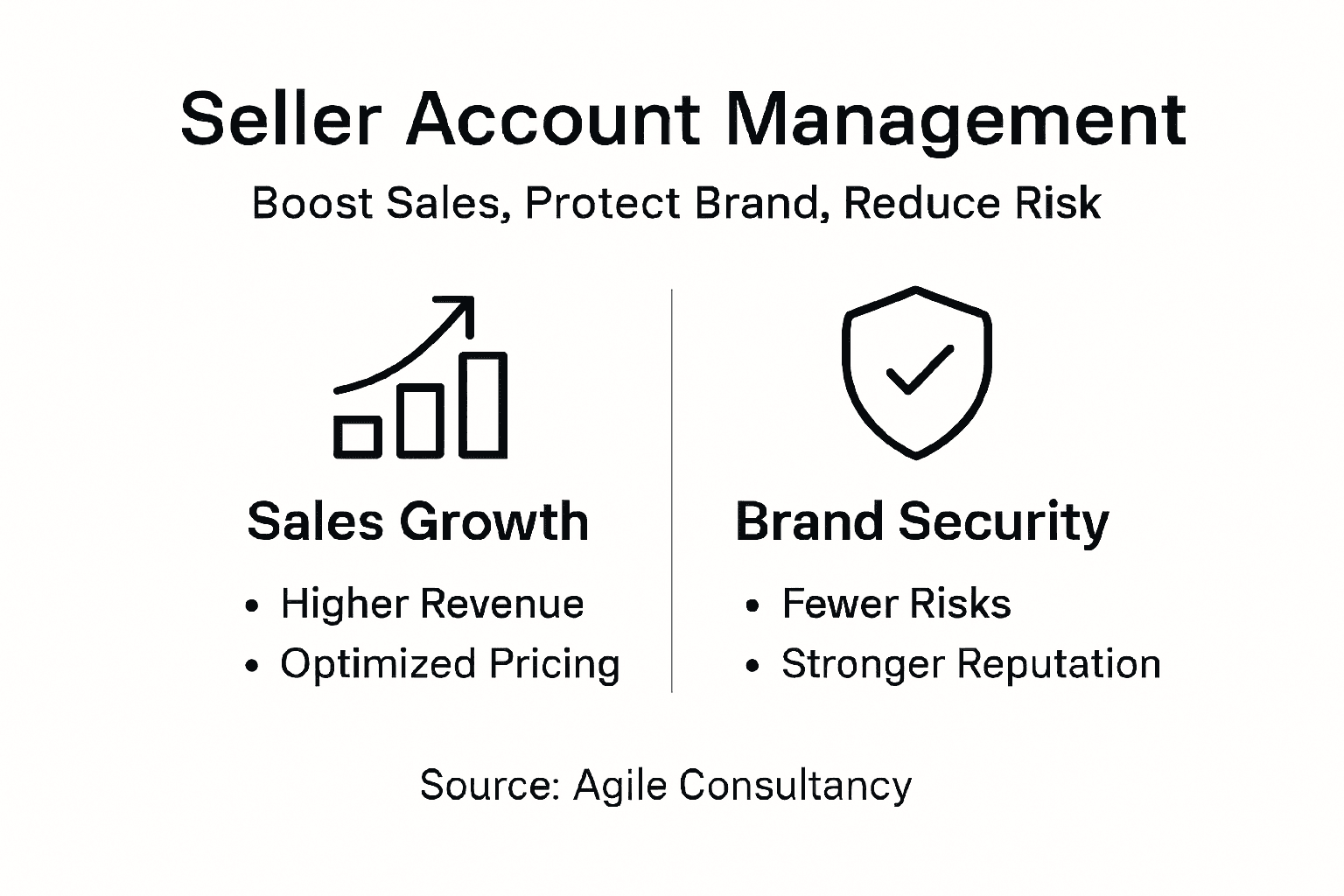
Proactive sellers catch pricing gaps before competitors do. You notice demand spikes in real time and adjust inventory accordingly. You spot cross-selling opportunities and bundle complementary products to increase average order value.
Here’s what proactive management delivers:
- Faster response to market changes and seasonal trends
- Data-driven pricing that maximizes profit margins
- Early detection of product-market fit issues
- Continuous A/B testing of listings and ad copy
- Strategic inventory planning that prevents stockouts
Sellers practicing proactive account management report 25-40% higher profitability within six months of implementation. They’re not selling more units; they’re making smarter decisions about which products to push and when.
Brand Protection and Risk Mitigation
Your brand reputation lives on Amazon. Counterfeiters, unauthorized resellers, and account hijackers don’t wait for you to notice. They act while you’re not watching.
Proactive monitoring catches these threats immediately. You spot unauthorized sellers using your brand name before they damage your reputation. You identify counterfeit listings and report them to Amazon before customers receive fake products.
Account security improves dramatically when you actively manage access, monitor suspicious login attempts, and update payment information regularly. Proactive stakeholder management reduces transaction costs and builds protective relationships with the platform.
Risk mitigation benefits include:
- Prevention of brand hijacking and unauthorized resellers
- Early warning systems for policy violations
- Protection against fraudulent customer chargebacks
- Rapid response to negative review campaigns
- Account health monitoring that prevents suspension
Enhanced Customer Experience and Retention
Customer satisfaction directly affects your Amazon metrics. Proactive account managers respond to messages faster, process refunds promptly, and maintain inventory levels that prevent backorder frustrations.
Anticipating customer needs and offering tailored solutions improves retention and encourages repeat purchases. When customers receive consistent, reliable service, they develop loyalty that competitors cannot easily break.
Your seller rating improves. Your return rate drops. Positive reviews accumulate naturally instead of requiring aggressive follow-up campaigns.
Competitive Advantage and Market Position
Your competitors aren’t managing accounts proactively. Most sellers are reactive, which means they’re always playing catch-up. You gain months of strategic advantage by acting first.
Proactive management reveals gaps in the market before competitors notice them. You identify under-served customer segments, launch products into gaps, and establish market position before the crowd arrives.
Proactive account management doesn’t just prevent problems-it creates sustainable competitive advantages that compound over time.
Pro tip: Set up weekly account health reviews using Amazon Seller Central dashboards. Schedule 90 minutes every Monday morning to review inventory levels, competitor pricing, and customer feedback. This single habit prevents 80% of account issues before they escalate.
Risks of Neglect and Policy Compliance Issues
Neglecting seller account management creates serious consequences that extend far beyond lost sales. Policy violations, account suspension, and legal liability threaten your entire business on Amazon. These aren’t rare edge cases-they happen to sellers who don’t actively manage their accounts.
The cost of inaction compounds quickly. One missed policy violation leads to warnings. Multiple violations trigger suspension. Once suspended, recovery takes weeks or months, and some sellers never regain full access.
Account Suspension and Loss of Revenue
Amazon suspends accounts for policy violations, quality issues, and suspicious activity. Suspended accounts generate zero revenue while you fight for reinstatement.
Common suspension triggers include:
- Listing policy violations (misleading descriptions, prohibited items)
- Poor account health metrics (excessive returns, negative feedback)
- Unauthorized reselling of restricted products
- Intellectual property infringement claims
- Suspicious payment or refund patterns
- Inadequate seller identity verification
Recovery from suspension requires detailed appeal letters, documentation, and waiting. During that time, your competitors capture your customers. Even after reinstatement, your ranking suffers from the suspension period.
Small sellers face disproportionate risk. You lack the resources to recover quickly from suspension, and your revenue base is too thin to absorb the losses.
Quality Management and Operational Failures
E-commerce platforms require structured risk management frameworks to prevent operational deterioration. Neglected accounts develop quality problems that cascade rapidly.
Unmonitored inventory leads to stockouts or overselling. Unreviewed listings contain outdated information or policy violations. Unmanaged feedback accumulates as negative reviews that damage conversion rates.
Quality failures trigger algorithmic penalties from Amazon. Your products disappear from search results. Your sales plummet. Customer trust erodes.
Compliance Risk and Legal Exposure
Compliance failures result in legal penalties and reputational harm. Tax obligations, consumer protection laws, and marketplace rules create complex compliance landscapes.
Common compliance issues include:
- Sales tax non-compliance across multiple states
- VAT registration failures for European sellers
- Failure to disclose required product warnings or certifications
- Intellectual property violations (using trademarked images without permission)
- Advertising claim violations (making unsupported health or performance claims)
- Consumer protection violations (not honoring return policies)
Ignoring these obligations invites regulatory scrutiny, customer complaints, and financial penalties. Courts can award damages exceeding your annual revenue. Government agencies can pursue criminal charges for willful violations.
Brand Damage and Reputation Loss
Your brand reputation on Amazon is fragile. Negative reviews, counterfeit products, and unauthorized sellers destroy what took months to build.
When you don’t actively monitor listings, counterfeits appear under your brand name. Customers receive fake products and leave one-star reviews on legitimate listings. Your brand equity disappears.
Unauthorized resellers undercut your pricing and damage customer relationships. You lose direct customer data and feedback.
Account neglect doesn’t cause gradual decline-it triggers rapid collapse that becomes exponentially harder to reverse.
Pro tip: Create a monthly compliance checklist covering tax obligations, policy adherence, and account health metrics. Schedule quarterly legal reviews with a professional familiar with Amazon seller regulations in your jurisdiction. Prevention costs far less than dealing with violations.
Below is a summary of the main compliance risks Amazon sellers face, along with their business impact and example consequences:
| Risk Type | Potential Business Impact | Example Consequence |
|---|---|---|
| Policy Violations | Immediate revenue loss | Account suspension for 2 weeks |
| Tax Non-Compliance | Regulatory penalties and back taxes | IRS or VAT fines, forced account closure |
| IP Infringement | Legal costs, brand reputation damage | Lawsuit or product takedown |
| Quality Failures | Lower search ranking, lost customers | Products removed from listings |
| Counterfeit Listings | Erosion of brand trust | One-star reviews, lost buy box |
Essential Practices for Operational Success
Operational success requires systematic practices that become habits. You can’t scale a seller account by relying on memory or occasional attention. You need repeatable processes that catch problems before they escalate.
Top-performing sellers treat account management like a business operation, not a side task. They establish routines, use checklists, and document everything. This consistency prevents costly mistakes and reveals growth opportunities.
Strategic Planning and Clear Objectives
Start with written goals. Not vague ideas-specific, measurable targets for sales, profitability, and account health.
Effective practice management relies on strategic planning and clear objectives. You need quarterly reviews where you assess performance against targets and adjust tactics.
Your strategic plan should address:
- Monthly revenue targets by product category
- Profit margin improvement goals
- Account health score targets
- New product launch timelines
- Market expansion plans
- Competitive positioning strategy
Without written plans, you drift. With them, you stay focused on what actually moves the needle.
Inventory and Listing Management Systems
Neglected inventory creates problems that cascade through your entire operation. Implement systematic monitoring of stock levels, reorder points, and turnover rates.
Review listings monthly for accuracy, policy compliance, and optimization opportunities. Update descriptions, keywords, and images based on competitor research and customer feedback. Remove underperforming SKUs that waste time and capital.
Maintain a spreadsheet tracking:
- Current inventory quantities
- Reorder status and lead times
- Product performance metrics
- Pricing history and competitor prices
- Listing optimization dates
Systematic tracking prevents stockouts, overselling, and policy violations.
Financial Monitoring and Profitability Analysis
Track profit by product, not just revenue. Many sellers operate unprofitable SKUs without realizing it because they focus only on sales numbers.
Monitor your costs systematically:
- Product acquisition costs
- Fulfillment fees (FBA or shipping for FBM)
- Advertising spend and ACOS (Advertising Cost of Sale)
- Returns and refunds
- Account fees and subscriptions
Calculate net profit per SKU monthly. Discontinue products below your minimum profit threshold. Reallocate inventory to high-margin products.
Customer Communication and Feedback Management
Respond to customer messages within 24 hours. Slow responses trigger negative feedback and reduce your seller rating.
Monitor product reviews daily. Identify patterns in negative feedback. Common complaints reveal product issues or unrealistic listing descriptions. Address root causes rather than chasing reviews.
Core account management skills include understanding customer structures and decision-making processes. Build relationships with repeat customers through follow-up emails and personalized service.
Compliance and Documentation
Maintain detailed records of all business activities. Document product sourcing, supplier agreements, tax registrations, and policy compliance efforts.
Create a compliance calendar:
- Monthly: Review account health metrics, check for policy violations
- Quarterly: File taxes, audit listings, competitor analysis
- Annually: Renew registrations, review contracts, strategic planning
Documentation protects you if Amazon questions your account or regulatory agencies investigate.
Operational success isn’t about working harder-it’s about working systematically with repeatable processes that compound over time.
Pro tip: Use a project management tool like Asana or Monday.com to track account tasks, deadlines, and team responsibilities. Set recurring weekly tasks for inventory checks, competitor monitoring, and customer message responses. Automation and visibility prevent oversight.
Protect Your Amazon Brand and Accelerate Sales with Expert Account Management
Managing your Amazon seller account is not just a task it is a strategic necessity to protect your brand from hijackers, optimize your listings, and boost your sales performance. The challenges highlighted in the article including counterfeit threats, policy compliance, and pricing optimization require proactive and expert management to turn risks into opportunities. Don’t wait for account suspensions or lost revenue to force your hand.

Take control of your Amazon presence today with Agile Consultancy Our team specializes in complete Amazon Seller Central account management, advanced Amazon PPC management including PPC optimization, and continuous listing monitoring to safeguard your brand identity. By leveraging data-driven growth strategies tailored to your brand’s needs you gain increased visibility and reduce advertising costs (ACOS). Visit our professional account management services to claim your free audit and start transforming your Amazon business now. Act fast because every moment without proper management is lost revenue and potential risk.
Frequently Asked Questions
What is seller account management and why is it important?
Seller account management involves monitoring listing health, optimizing sales performance, and mitigating risks to enhance sales and brand reputation on platforms like Amazon. It is crucial because effective management directly influences sales growth, operational efficiency, and brand protection.
How can proactive account management boost sales?
Proactive account management boosts sales by identifying cross-selling opportunities, optimizing pricing strategies, and adjusting inventory based on demand trends. Sellers who actively monitor their accounts are more likely to respond quickly to market changes, driving higher profitability.
What are the common misconceptions about seller account management?
Common misconceptions include beliefs that account management is only for large sellers, that it means micromanaging every transaction, and that it’s solely defensive. In reality, effective management focuses on strategic oversight and can reveal untapped revenue streams for sellers of all sizes.
How can neglecting seller account management affect my business?
Neglecting seller account management can lead to account suspensions, policy violations, and reputational damage. Sellers may suffer immediate revenue losses and long-term challenges in regaining full account access, ultimately leading to diminished sales and brand trust.
Amazon Growth Agency - Listed in the Amazon Service Provider Network
Agency specialized in growing brands on Amazon through data-driven PPC strategies, conversion-optimized listings, and complete Seller Central account management.